
Areté: Empowering Performance Groups and Their Audience in the North
It only took a couple of years post-pandemic but theater buffs and reviewers have been steadily making trips to the north to watch plays produced by Areté Ateneo, the theater-producing arm of the 16,000-sqm complex with the same name. Word of mouth and consistently positive reviews are enough motivation to brave the exasperating traffic and possibly long hours of commute to watch a production in one of the performance venues inside the Ateneo de Manila University (AdMU) campus in Katipunan, Quezon City.
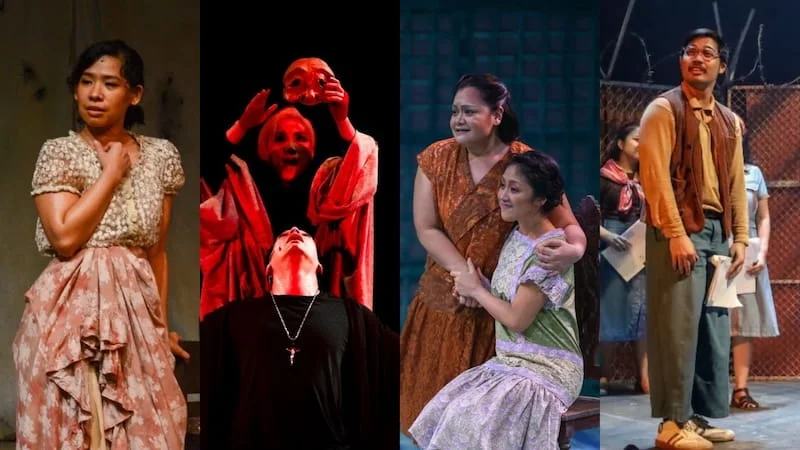
The very first season in 2025 was a milestone year. TheaterFansManila.com’s (TFM) review hailed Si Faust, which retold the famous German classic as a rock opera, “a thrilling, unholy marriage of theater and heavy metal.” Quomodo Desolata Es? Isang Dalamhati, a trimmed-down deconstructed version of Nick Joaquin’s Larawan, was named the year’s Best Production of a Play at the first Manila Society of Theater Reviewers (MSTR) Awards.
To date, 2026, the sophomore year, has been living up to the promise. Winning critical thumbs-up are Subversive Lives, which depicted the real-life story of a family who suffered during the Martial Law era, and Karmen 1949, Georges Bizet’s famous opera transplanted into a Manila just recovering from World War II.
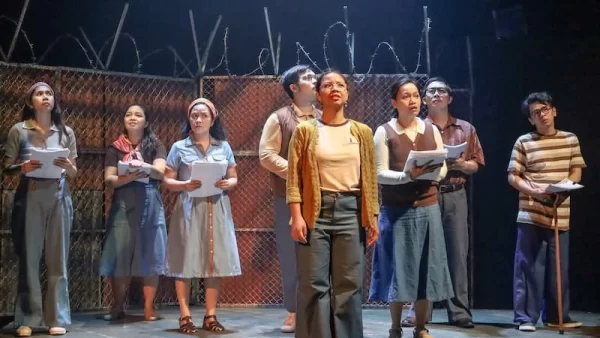
The cast of Subversive Lives; Photo Credit: Myra Ho
The three-person creative team behind the theater-producing arm does feel a bit gratified at the audience response. During their interview with TheaterFansManila.com, Resident Technical Director D Cortezano said that one of their goals is to have their own brand or distinct identity that will attract theater buffs and newbies alike because of the quality of work that is being presented. He likened it to how he perceived the Cultural Center of the Philippines (CCP) as a young artist growing up in the industry; he was confident that any show he watched in it would live up to very high standards.
In the same way, he wants “people to go and say that they’re going to watch in the Areté, whatever the show may be,” he said, “because they know that the Areté show [will have] a certain level of quality.”
Identifying the market
The positioning is strategic and practical. According to Areté Executive Director, Dr. Estelle Marie Ladrido, Areté the theater-producing arm intends to provide “an alternative venue for theater-goers” who live in the north and have a hard time travelling to the other end of the Capital. In the south, the malls, hotels, and fringe studios of Makati City, Pasay City, and the Bonifacio Global City have become the go-to destinations for musicals and straight plays.

Maita Ponce, Joseton Vergel de Dios; Photo Credit: May Celeste
Not surprisingly, the students of AdMU and nearby schools like Miriam College and the University of the Philippines were among Areté’s first audiences. Then, people from the greater Quezon City, Marikina, Antipolo and Pasig started coming in to watch. In an interesting reversal, Areté started welcoming audiences from provinces outside Metro Manila like Bulacan and Pampanga “who would rather watch [in our building than another auditorium] in the south” which they found “too far,” said Cortezano.
Bringing in participants and stakeholders from the outside world, well outside the AdMU campus, is intrinsic to the Areté DNA when the structure itself was first launched in 2017. With numerous spaces and classrooms that could host galleries, learning labs, films, and shows, its mission and vision was to be an innovation and creativity hub. According to Ladrido, Areté the building was designed to “bring in performances and artistic endeavors … within the community and at the same time to be the face of Ateneo’s innovation and creative spirit outside.”
This gives the theater-producing arm room, space, and the necessary support to fulfill the greater Areté mission of nurturing and unleashing innovation, art, and creativity. The creative team – which also includes Artistic Director Jerry Respeto – answers to the Office of the President of the AdMU. From the beginning, the theater arm was positioned as a professional group. This immediately sets it apart from the other homegrown student productions that are based in the campus, such as Ateneo Blue Repertory, Ateneo ENTABLADO, and Tanghalang Ateneo, which are under the Office of Higher Education and the Office of Student Affairs.
The season line-up
The student-run theater companies are classified as amateur learning labs teaching the dramatic form. They may have to adhere to the curriculum and limit their artistic choices such as professional actors and production values based on their limited resources. Their primary audience and community remain the college, mostly the faculty and their fellow students.
However, because Areté the theater producer is under the Office of the President, its “services are open to all,” said Ladrido. “We’re not just confined to the college. It’s the entire school” – which includes basic education and high school – “that we’re coordinating or collaborating with.”
Ladrido, Respeto, and Cortezano collaborate on the annual season line-up. The target is three plays per season unless an economic crisis such as the current rise in fuel costs, brought by the Middle East war, forces them to reduce the number to two.
Selection of the material often starts with a known literary work, which then undergoes an unconventional transformation. “Ginawa namin ang Larawan,” recalled Respeto. “Tapos nag-Faust kami. Literature iyon. Noong nag-Subversive Lives kami, book iyan. At the same time, bukod sa literary, may pagka-experimental lahat.”

L-R: Delphine Buencamino (Candida Marasigan), Gab Pangilinan (Paula Marasigan); Photo Credit: Yan Caringal
The decision how to transform a classic into a stunning relevant piece comes from the creative team who then passes on the mandate to their chosen director. They worked with Nelsito Gomez to convert Faust’s devilish seduction into rock opera, and asked Delphine Buencamino to use the devised theater staging to make the audience silent participants in the Martial Law epic drama.
“Areté is risky theater,” Cortezano pointed out. “That’s what I love with Areté productions – they’re uncertain, risky, and overall brave.” That approach also needs the capability to keep on “testing waters” in order “to understand what the audience needs right now.”
Risk and experimentation
Sometimes, they can allow themselves to fail in order to learn and improve for the next time. Cortezano’s late mentor and Areté’s founding Artistic Director, Dr. Ricardo Abad, had always challenged his proteges to “jump” into innovation. “If you don’t jump, then you don’t try, and if you don’t try, then you won’t know,” he would always tell them. As they do continue to explore theater at the cutting edge, Cortezano admitted that in opening a risky show, “we may not be ready, but all the avenues and possibilities are ready for us, of what we can do and what the theater is now.”
“You pick a material like Subversive Lives and Faust, and it’s literary,” Ladrido agreed. “And then, we have to innovate it. We have to make it different. We didn’t know if Faust or Subversive Lives would work. But fortunately, they did.”
She added that this innovative, risky kind of theater shakes the audience out of their comfort seats and “provides space for conversation” on topics that could be difficult or uncomfortable. Exposure to unconventional, out-of-the-box theater can help them develop “new ways of thinking, to be creative, agile, and respond to problems.” As a communications teacher herself, she said that those skills are necessary to help especially the young people navigate in a world where “there’s a lot of uncertainty and ambiguity. To think about new ways of doing things, so that you can respond to the issues of today.”
Another way that Areté the theater producer stretches its wings is co-producing shows with other professional companies outside the campus. Ballet was prominent in 2026 with Alice Reyes Dance Philippine’s Kenkoy and Ballet Manila’s Ibong Adarna. At the same time, Areté also gave these ballet companies, which usually perform in venues like Samsung Performing Arts Theater in Makati and Aliw Theater in Pasay respectively, “another way to access a more northbound audience,” said Ladrido.
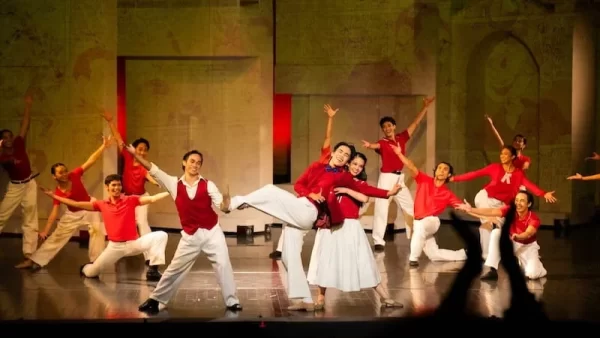
Renzen Arboleda as Kenkoy, Monica Gana as Rosing, and the cast of KENKOY; Photo Credit: Erica Feliz Marquez-Jacinto
As Ladrido described the other side of Areté positioning: “ … the venue where you can bring these productions to an audience in the north.”
Other performance companies who want to tap into that same audience have the following venues to choose from in Areté the building: the 840-seater Hyundai Hall which is suitable for the bigger productions; the 200-seater Doreen Black Box for the more intimate, cutting-edge shows; and the open-air Ignacio B. Gimenez Ampitheater for festivals and celebrations.
The outside groups
Cortezano, who handles the rentals and scheduling of these outside companies, said that Abad had always envisioned an openness to the greater theater community that will “give a chance to those who want to use [the venues].” He cited the smaller theater groups like Barefoot Theatre Collaborative and Mad Child Productions as among the venue tenants. Sometimes, participants in CCP’s annual Virgin Labfest would ask to hold their rehearsals in the building.

Gab Pangilinan (Gabriela Silang), Myke Salomon (Diego Silang), and the cast of Gabriela The Musical; Photo Credit: CJ Ochoa
Still, not everyone who applies to rent a space is automatically granted approval. According to Respeto, the prestige associated with the building has prompted many people to think of it as an events space where they can hold personal gatherings like wedding receptions. Some people look at the “architecture ng building … Kapag nagawa mo iyung event dito, parang may prestige ka,” he said.
That is why, Ladrido stressed, “we have to hold the ground that we’re not actually an events place.”
She elaborated on the process when it comes to bona fide theater companies: “If the facility is available, then it goes into the next question of whether or not we should allow them to present here. We ask, ‘Can you give us a letter of intent which presents what your project or your presentation is about?’”
Respeto and Cortezano then study the letter and other relevant materials to see if there is alignment with Areté’s mission and vision. They determine if the proposed show champions innovation, creativity, and the welfare of the country.
Cortezano said that long-time partners who had been with Areté are often accommodated. Like a long-time “suki,” a “returning company” like Barefoot Theatre Collaborative who had been with them from the very start “would have special privileges.”
Cortezano, who is active in many theater productions outside the AdMU, believes that the “cross-pollination” between the overall Metro Manila (and beyond) theater ecosystem and “Areté being the venue in itself and because it’s also a producing arm” will continue. The incoming audience and recognition are welcome, but the work never stops for the creative team who are “trying to build a community and a certain demographic – people who come to Areté because of the shows.” Whether those performances are student-based, Areté-produced, collaborations, or performance companies renting spaces, the Areté brand will be prominent and continue to draw in audiences—from their targeted north and (as the audience indicates) even the south.

Comments