

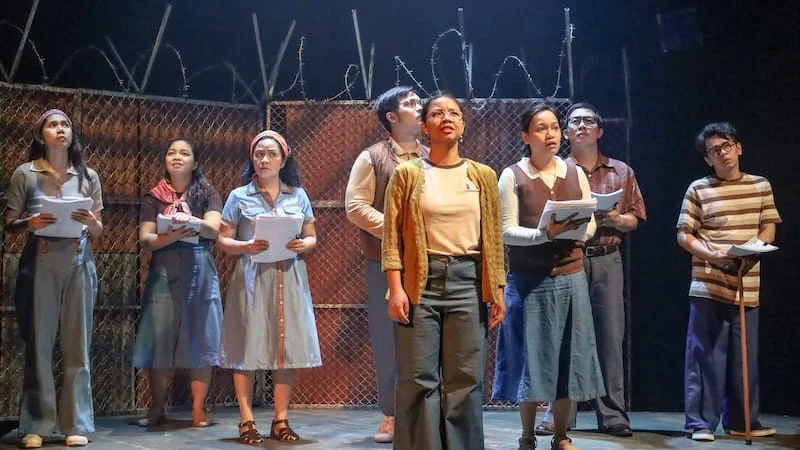
‘Subversive Lives’: The grand narrative of history becomes a family’s intimate personal journey
The book Subversive Lives, published in 2012, is a thick 512-page tome that spans more than three decades and captures the horrific experience of a twelve-member family during the agonizing days of Martial Law, which took place from 1972 to 1986. The current Areté production transfers all that drama from the printed page to the theatrical stage in 2.5 hours, without losing its essence. “How did you do it?” asked one prominent Metro Manila theater critic of Areté Artistic Director, Dr. Jerry Respeto, after watching the show.
In an interview with TheaterFansManila.com, Respeto gave a very comprehensive answer: the devised theater approach, where the cast members collaborated with the creative team to come up with a script; a deep intellectual and emotional immersion of all those involved in the production to capture the behavior, nuances, and beliefs of an era; and the active participation of the surviving members of the Quimpo family who are the protagonists of the real-life story.
At the heart of Subversive Lives, the play, is one important, if heartbreaking, message. As Respeto summed it up, “Talagang mahirap mahalin ang isang bayan.” The high price of that patriotism then calls forth a vigilance to prevent the horrors of the past from repeating in the present and future. “Kailangan natin iyung ganitong klase ng mga teksto,” he added, “para maging vigilant pa rin sa lahat ng anyo ng mga umaabuso o nag-vi-violate sa karapatang pantao.”
The said text, which starts from the book itself, is written by the late Susan F. Quimpo and her brother, author Nathan F. Quimpo. It tells their individual stories along with eight of their siblings and a sister-in-law as they dedicated themselves to the resistance against the dictatorship of President Ferdinand Marcos Sr. Amazon.com, which is selling the book, says it shows in painstaking detail the siblings’ heroism and courage as they organized strikes and underwent imprisonment and torture. Yet the other bleaker side of the revolution is also not cushioned: betrayal from inside the movement itself; the military abuse of women; and the alienation of parents from their children.
Ordinary people
According to Respeto, choosing Subversive Lives as a play to headline its 2026 season stemmed from two reasons. First, the text’s discussion of conflict was aligned with Areté’s current season theme about the proximity to war. “Iba’t ibang anyo ng rebolusyon,” he pointed out. Second, he and his fellow Areté leaders – resident technical director D Cortezano and advisor Guelan Varela-Luarca – wanted to present history from a different and more intimate perspective: “Hindi naman iyung laging grand narrative. Ang history ay naroon sa pang-araw-araw na karanasan [ng ordinaryong tao].”
Perhaps there is no better microcosm to show the grander society in all its detail than the family. “Kapag nag-focus ka sa pamilya, makikita mo yung kasaysayan, hindi lamang kasaysayan ng pakikibaka,” Respeto elaborated. “Parte ng kanilang kasaysayan ay iyung paraan kung paano sila naging ina, na tinitimbang ang iba’t ibang pananaw. O ang ama, na nagtataguyod ng kapakanan ng anak, pero iba yung landasin ng bawat anak. Isang anak na napunta sa Opus Dei, isang anak na nawala bigla, isang anak na binaril ng kasama—so lahat ito, mga pang-araw-araw na dinaranas sa panahon ng batas militar.”
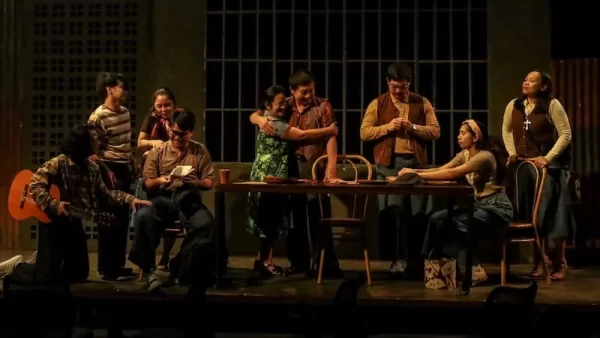
The cast of Subversive Lives; Photo Credit: Myra Ho
Respeto spent 2025 contacting the Quimpos for permission to adapt the book for the stage, as well as a request for their participation. His colleague, Norman Quimpo, a professor at the Ateneo de Manila University, connected him to his brother and the book’s author Nathan. The family’s first request was the play’s retention of the book’s title. The second request was a copy of the script. To their surprise and eventual acceptance, Respeto advised them that the family would be collaborators in writing said script: “I-de-develop natin na may konsultasyon sa inyo.”
That protocol is in alignment with the aforementioned devised theater, which has the cast and crew use improvisation, dialogue, and workshopping to create the initial script. The dramaturgist (Sabrina Basilio) then weaves all those ideas together to form the final version. Respeto gave another task of the dramaturgist: “Nag-research mismo sa kapaligiran at konteksto ng panahon.”
Subversive Lives director Delphine Buencamino made knowledge of, or experience in, devised theater a requirement for all the actors who auditioned for or were invited to join the production. “Kailangan kapag on board na ang actors, alam nila ang devised theater,” said Respeto. “Walang resistance sa process.”
Collaboration and immersion
The ensemble of ten actors ultimately cast as the Quimpo siblings, parents, and other characters were all professionals with extensive experience. All of them were given a copy of the book to read and then discuss the chapters, their characters, and all the other literary and dramatic elements in a book club. They attended lectures given by professors of history and political science to understand the historical events, cultural norms, and political spectrum that pervaded the 1970s.
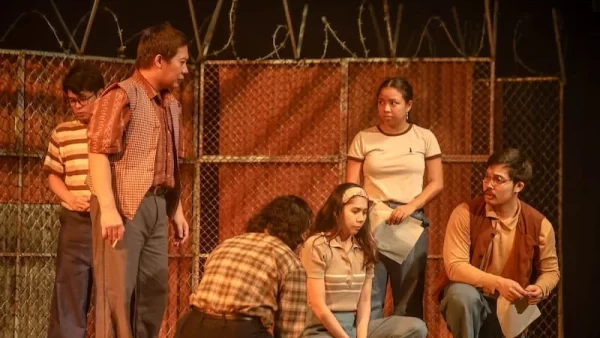
The cast of Subversive Lives; Photo Credit: Myra Ho
One result of all that collaboration was that the author of the book became the fulcrum of the play. “Ang spine [ng play] ay si Susan,” said Respeto, “dahil ang libro ay hindi naman linear. Ang libro ay accounts ng iba’t ibang mga anak.”
Through email, Nathan would give comments on the script and its scenes as they were being formed. As pre-production progressed, some of the surviving siblings got involved and were interviewed by the cast and crew online or personally: Liz Quimpo-Bulataw, Norman F. Quimpo, Emily May Wicket, Kathleen Karen Castaneda, Lillian Quimpo, Nathan Gilbert Quimpo, and David Ryan F. Quimpo. Three siblings had passed away: John was presumed taken by the military, his body never found; Ismael Jr. or Jun was killed by a fellow revolutionary; and Susan died of cancer. Tina, Jun’s widow, also participated in the production process.
Respeto named one phase that was crucial to the formation of each of their characters: “Iyung member ng pamilya, nagkaroon na sila ng individual one-to-one consultation yung mga actors sa role na pino-portray nila. Hindi sila [naging] cardboard character.”
This constant interaction also bridged the tremendous age and cultural gap between the Millennial actors and the Baby Boomer real-life characters they were portraying. With the eldest Quimpo child born in the early 1940s, the surviving siblings would be aged from 70 to 80 years old today. Thus, when it came to the thespians, “kung huhugot man sila, dahil malayo na sa naranasan nila [iyung panahon na iyon], mayroon silang paghugugutan,” added Respeto.
Breaking the fourth wall
Another boundary was also broken in the making of the play. The production became more representational than presentational. Cortezano’s set design disposed of the usual proscenium. It bent the fourth wall and created a world that brought the audience literally into the middle of the turn of events as they are happening.
“Kasi simultaneous ang pangyayari. Mabilis,” said Respeto. Scenes would break out at the same time at different parts of the auditorium. “May action dito, may action dito, tapos uuwi rito. Mahihilo ang audience sa kaka-turn. Anong solution: swivel chairs.”
Those swivel chairs might help the audience follow the play. However, the occasional discomfort in the shift in movement can also communicate a subtle message: what they see onstage should jolt them out of their comfort zone and spur them into thinking about the issues being presented. “Kailangan ka ma-bother,” Respeto said candidly.
Respeto’s own recommended solution for the current society that is still bogged down by corruption is inclusive and systemic: “Ang problema sa bayan natin ngayon, nagpaplano tayo, pero lahat ay iniwan yung masa. Para makuha natin yung paglaya ng bayan, dapat kasabay nating inaangat ang adhikain ng nakakarami. At dapat din, yung nakararami, dapat marunong din mag-isip.”
Educational programs that can bring about a shift in culture and values would be a long-term remedy. Respeto does take heart that the play has a positive impact on its audience. Copies of the book displayed in stands outside the auditorium were sold out after each performance – a significant gesture for a digital generation that did not grow up with the printed page.
He also expressed his hope that the book and the play Subversive Lives would awaken its young audience into becoming more mature, patriotic leaders in the future. “At itong teksto ay parang nakikita kong lagusan para higit na maunawaan ng mga sambayanan kung ano ang nangyari sa kasaysayan natin,” he said. “Yung karanasan na yun, kapag sila na ang nasa tamang edad, sa tamang posisyon, sa pamumuno, bitbit nila iyong ganoong klaseng kaalaman – kung ano ang mangyayari sa bayan kapag hindi tayo kumapit sa mga programang nagtataguyod ng kasarimlan.”
Subversive Lives will have its final run at the Doreen Black Box Theater, Areté, Ateneo de Manila University, from September 4 to 6, 2026.

Comments