
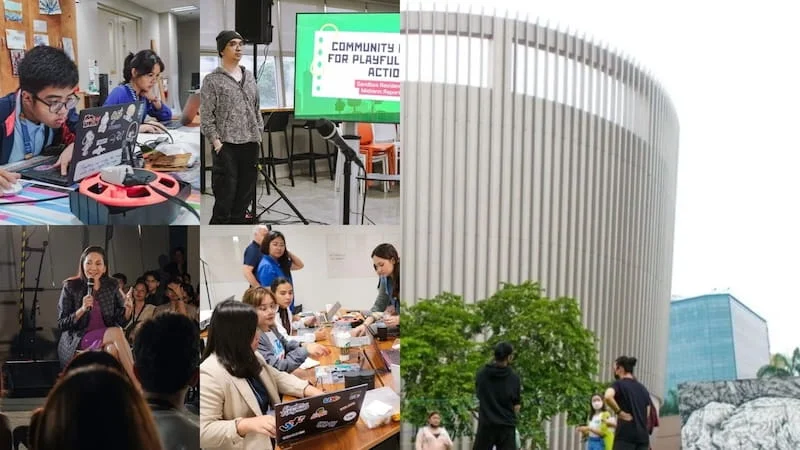
Areté: Making Education Continuously Relevant in an Age of Perpetual Disruption
Programs, partnerships, and productions push the boundaries of learning.
Areté, in its original Greek form, means excellence, virtue, and the fulfillment of one’s highest potential. Far from being just an aspiration, it is intentional: an individual who possesses areté focuses, to the best they can, on living a moral, exemplary life that actualizes their strengths and capabilities.
In 21st-century Metro Manila, Areté is an impressive, 16,000-sqm four-storey structure that connects two wings that host art galleries and exhibits, theaters and similar performance venues, classrooms and conference rooms, learning labs, studios, and open flexible spaces. Fully operational in 2018, with various components gradually opening in previous years, it was launched by the Ateneo de Manila University (AdMU) in Katipunan, Quezon City as its hub of creativity and innovation, those processes nurtured and applied in the respective wings named after them.
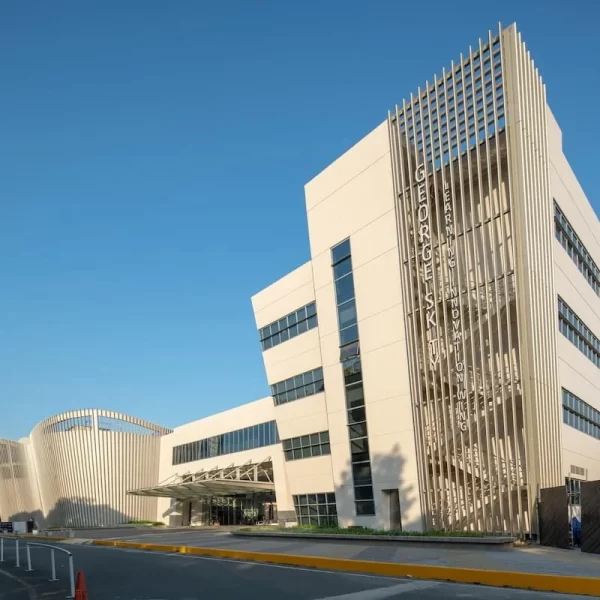
Photo from Areté’s website
Areté, the complex and the culture it embodies, is pushing the boundaries of education beyond the traditional four walls – probably because at no other time is areté needed more than today, when continuous unprecedented change and institutional disruption challenge long-held stability, while leaving unpredictability in their wake.
A 2025 insurance company report traces young Filipinos’ mental health challenges to rising anxiety about an unsteady future and dwindling job security. An OECD global study in the same year answers: out-of-the-box, critical, and creative thinking will prepare future students for professions and structures that may not even exist yet.
This is where Areté helps its learners and partners, inside and outside of AdMU, develop those skills. “A lot of [education] is experiential, and what we can help with is providing learning experiences,” said Areté Executive Director, Dr. Estelle Marie Ladrido, in an interview with TheaterFansManila.com. “Art facilitates innovation and education, and education facilitates art. The important thing is to innovate and find new ways to express” new ideas and solutions.
Outside professionals
The weaving of art, creativity, innovation, culture, and academics can be seen in the collaboration happening within the structure. While Areté has its own programs, other departments of the greater AdMU rent spaces in the building, like the university’s Department of Fine Arts and the culinary institute Le Cordon Bleu Manila, among others.
At the same time, Areté as a theater producer has tapped industry luminaries for its own homegrown productions, partnered for co-productions with professional companies like the Alice Reyes Dance Philippines, and opened its doors to groups like Barefoot Theatre Collaborative to stage their plays in the building’s venues.
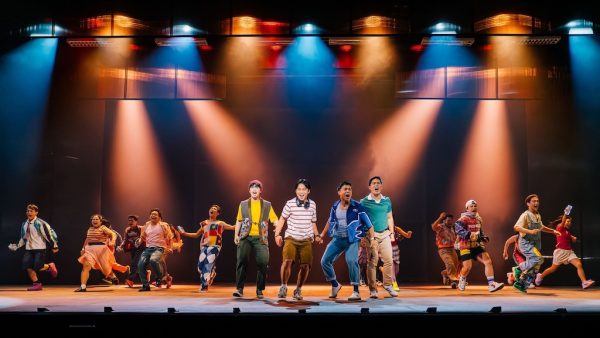
Barefoot Theatre Collaborative’s Bar Boys: The Musical in Areté; Photo Credit: Sace Natividad
What makes this holistic, inclusive approach that encourages collaboration among groups is that Areté and its team, led by Ladrido, report directly to the Office of the AdMU President. They are not under the jurisdiction of the Office of Higher Education or that of Student Affairs. This positioning supports another Areté’s objective: “to present the best of what Ateneo is to the community and world out there,” said Ladrido, and “that becomes one way that the creative and innovative hub can benefit so many.”
Collaboration
One example of a collaboration with internal and external partners is Living in Water: A 360° VR Film Experience, which showed how residents in Isla Tibaguin cope daily with the floodwaters that literally turned their streets into rivers. Director Ana Santos, an Atlantic Fellow for Health Equity in Southeast Asia, plunges the viewers into a vicarious experience of submerged towns by making them wear virtual glasses. Areté provided a venue, the Interactive Teaching Lab, for the film screening which was attended by some faculty members and students. It tapped the resources of other AdMU parties like the Ateneo Laboratory for Learning Sciences.
Meanwhile, AdMU students get their regular opportunities for innovation through the Eugenio Lopez Jr. Makerspace, which the Areté website describes as a “digital laboratory dedicated to hands-on activities for creative engagement.” Introductory workshops give them crash courses on the cutting-edge skills useful in today’s marketplace, like 3D design and modelling and printmaking techniques.
The Sandbox Program
Then, the Sandbox Program supports student ideation and implementation of unconventional projects that can become a step to solving real-life “wicked problems” like urban poverty, health inequality, overwhelming traffic gridlock, and the lack of sustainability. “Ateneo wanted to think of ways in which ideas can actually help,” said Sandbox Programs Coordinator Skilty C. Labastilla, Ph.D. “There’s really no single solution to them. The program ideas will not necessarily resolve these big problems, but aim to chip off some of the nitty-gritty” of their complexity.
Sandbox’s three components—Residency, Student Challenge, and Co-Lab—foster projects where a team “composed of students from different disciplines work together with a group outside the university to devise an actual solution to a problem they have seen,” said Ladrido. The program provides avenues and platforms that lead to a “learning that is outside the classroom and is very experiential. You encourage [the students] to be brave, courageous, and entrepreneurial,” said Ladrido.
According to Labastilla, AdMU faculty members and undergraduates alike can apply for the yearly Sandbox grants, which award P100,000 each to winning projects. Out of AdMU’s estimated 10,000-strong student body, four teams are chosen every year from the 15 who apply. The breaking of boundaries and the introduction to other perspectives happens from the first day of application. “We actively encourage during the application [that the applicants] team up with students from different colleges or courses because we want that interdisciplinarity to happen,” said Labastilla.
In the same way, the screening committee professors who evaluate the projects come from very different disciplines like the environment and intellectual property.
Incubation
During the first 12 months, the participants test their ideas in Areté’s many labs, with mentors guiding them in a process that combines creativity, art, research, and community engagement outside the academia’s four walls. “When the project is ready for incubation and scaling up, that’s when we can help connect them to other offices in Ateneo or [organizations] outside [the campus],” Labastilla said. If the project goes beyond the first year due to expansion, the team can apply for a space in Areté where they can hold office and maintain their institutional linkage with AdMU.
One grant project, ArchaeoBot, uses robotics in archaeology to reveal more details about pre-Hispanic life. Being fine-tuned before its formal deployment, it is being used in Palawan digs. It started with “a residency that wanted to look at the linkages of Philippines and Southeast Asia in terms of its historical past,” Sabastilla said. After graduation, the students who had networked with archaeologists, asked to be a Colab partner of Areté to build the robot “that could help in these little tedious tasks that are being done by humans.”
View this post on Instagram
Sabastilla is particularly proud that the Coastal Cities at Risk in the Philippines initiative, which builds disaster resilience in the low-level areas in Iloilo, Naga, and Metro Manila, originated from a Sandbox Residency project known as the Urban Resilience Laboratory. “Coastal Cities at Risk is now an international network of academics and advocates for sustainability who look out for climate change and hold international seminars” [about it],” he said.
Sustainability
The Office of the AdMu President funds the grants, programs, and Areté’s theater productions and other activities, as well as the building’s maintenance. Still, Ladrido and team are mandated to generate their own revenues and ultimately become self-sustaining. One major source of income is the rentals paid by non-Areté groups for use of the theater venues, labs, artistic facilities, and classrooms.
“We have been meeting our [revenue] targets,” disclosed Ladrido. “Last year, we were in the black.” She added that the 840-seater Hyundai Hall and the 200-seater Doreen Black Box are the “major revenue generators … that help pay the bills and sustain the other parts [of Arete]. Smaller groups pay to stage their productions or art exhibits in more intimate venues like the art gallery, a dressing room, and a campus laboratory.
To remain at the frontiers of innovation and creativity, Areté leaders keep up with industry and academic trends, networking with local and international professional organizations.
Perhaps above all, they encourage their stakeholders to keep exploring. Failures, like a Christmas-tree-design project that no one signed up for, are treated not as signs of defeat but points of improvement.
“We learn from the mistakes that we’ve made and build year after year on what we’ve learned,” said Ladrido. “We will continue with that spirit which says to try.” Students are allowed to fail “and learn much from the failing.”
And over the course of time, develop new strengths, realize more potentials, and positively impact society in a major way—living up to the principle of areté.

Comments