

‘anthropology’ Brings Artificial Intelligence Into The Heart Of Human Loss
“Barefoot Theatre Collaborative’s upcoming staging of Lauren Gunderson’s ‘anthropology’ asks what happens when technology enters the most human space of all: grief.”
When conversations turn to artificial intelligence, they often land on fear. But anthropology resists that familiar framing. Instead of asking what technology can do to us, the play turns inward, asking not what AI can do to us but what we can do with it, especially in our most vulnerable moments. For Director Caisa Borromeo, the urgency of staging the work lies in how closely its questions mirror the present moment. “I love the aspect of just exploring AI and what that means for us and what connection really looks like now that we have AI in our world.”
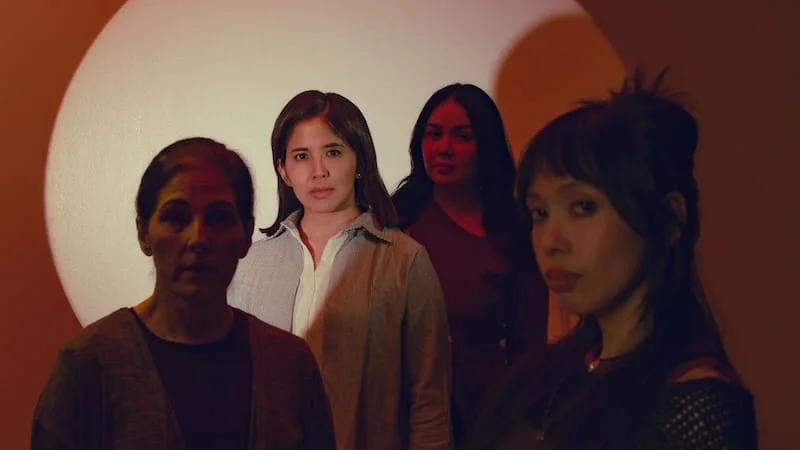
Written by American playwright Lauren Gunderson, anthropology centers on Merril, an AI programmer struggling with the sudden loss of her sister Angie. Unable to accept Angie’s disappearance, Merril builds an artificial intelligence modeled after her, using data, memories, and language to recreate her presence. First staged in the United States in 2023, the play now makes its Asian premiere in the Philippines through Barefoot Theatre Collaborative, featuring Jenny Jamora as Merril, Maronne Cruz as Angie, Mikkie Bradshaw-Volante as Raquel, and Jackie Lou Blanco as Brin, the sisters’ mother.
The ever-evolving world
For the team, staging anthropology now feels like a response to the pace of the world it reflects. What the play captures is not just technological advancement, but the speed at which it forces humans to make emotional and ethical decisions before they fully understand the consequences. As Cruz said, “AI is something that’s going to keep existing and only improving.” This play looks at whether AI “helps or hinders the grieving process,” she added.
Borromeo pointed out that the timeliness of anthropology is almost accidental. “Lauren Gunderson actually wrote this a couple of years back, I think in 2019 before AI exploded. So she was actually telling us that it’s so timely that we’re doing it this year today. Because she wrote it before, she didn’t even know it was going to take over the world. And I think it’s heading in that direction.” Jamora echoed this, seeing the story within a longer tradition of writers anticipating cultural shifts before they fully arrive. “It’s so interesting how these folks, these writers are so prescient. So advanced. It’s like stuff is going to happen now but they wrote it way back…It’s like we’re not listening. Which is why we really need to keep having conversations about things like technology.”
Despite its focus on artificial intelligence, anthropology ultimately resists framing technology as the most complex force onstage. As Cruz put it, “You can create the most intricate tech you want. But nothing will be more complex than the human heart.”
Heart of the matter
anthropology is a story about women navigating loss and seeking human connection, which drew Borromeo in. “It’s for women who are so flawed and lost and looking for connection, and they’re so attached to each other and longing to be understood. And we just love watching characters like that, because I think we can relate to characters who are looking for answers, or who are looking to be understood, and looking for connection,” she said.
Bradshaw-Volante shared her familiarity with her character Raquel. “I can relate to her so much. It’s not new information to me…Just being able to help someone who is grieving while you, yourself, is grieving as well..trying to understand the person who has really lost someone and how can you be there for that person while still being able to take care [of] yourself.”
Jamora approaches Merril from a similar angle. “I think what makes Merril very interesting to me and different is that with the relationship with her sister, she was the parent. She had to be the stable one, she had to be the responsible one. She had a lot of balancing to do.” Jamora also pointed to the unique challenge of performing a role where intimacy is expressed through technological assistance. “I’ve never had a character that had this kind of technology to play with. So, sometimes, there’s not even another person on stage, but I’m supposed to be talking to somebody.”
Behind the scenes, these bonds between sisters, lovers, and parents are built deliberately and collectively. Cruz shared that the process extends beyond rehearsals. “Teamwork talaga. We discussed based on the text, like what might have gone down between Merril and Angie, how much they go along, how much they depend on each other…But of course to build an actual bond, we also hang out a lot.” She hopes for that offstage closeness to be carried into performance, giving weight to a natural feel of sisterhood.
Beyond online connections
For Blanco, being part of this play is as much about understanding technology as it is about understanding the people it connects. “Because I think what [anthropology] does is it gives us a better balance. Of course technology is very important, but I think when you watch this play you also realize the dangers if you take it too far,” she said.
Cruz mentioned that the play serves as a mirror for human decision-making. “I think it’s way too unregulated, but that being said, if anything, this play just improved sort of our understanding of how AI is a tool and it’s really up to the humans to determine whether or not it’s going to be good for us, to what extent we should use it.”
“I am Gen X, so I reached the beginnings of dial-up…I feel very fortunate because it gave us a sort of applicability and adaptability to all the technologies that came our way. We use it with caution, for practical things,” Jamora said. For her, the play marks a shift from technology as utility to something far more intimate. “I can’t imagine what it’s like to be born, to have been born already with this technology,” she added, reflecting on how AI is used in the story.
Borromeo situates the play within the generational lens of human communication. “As a millennial, as somebody who had pagers, I am also very grateful that I grew up as a child without technology. And I think for me, communication has always been so important in connecting with humans, which is what we longed for during the pandemic…I think that’s what my hope for in this show, that people have conversations about how they can connect with humans more, how they can connect with their loved ones more, how they can connect with themselves more without technology.”
She sums it up simply: audiences should expect a lot of “heart and feminine energy” from this show.
Barefoot Theatre Collaborative’s first Philippine staging of anthropology runs from March 13 to 29, 2026, at the Doreen Black Box, Areté, in Quezon City.

Comments